This guide breaks down everything you need to know .from the fundamentals to the latest trends shaping how search engines rank content today.
Introduction
Search Engine Optimization (SEO) is no longer just about stuffing keywords into a webpage and hoping for the best. In 2026, SEO is a sophisticated, multi-layered discipline that blends technical precision, compelling content, and deep user understanding. Whether you're a blogger, a startup founder, or a seasoned marketer, mastering SEO is the single most cost-effective way to drive sustainable, long-term traffic to your website.
What Is SEO and Why Does It Matter?
SEO is the practice of optimizing your website so that search engines like Google, Bing, and others rank it higher in search results for relevant queries. The higher you rank, the more visibility you gain . and visibility translates directly into clicks, leads, and revenue. Consider this: over 90% of online experiences begin with a search engine, and the first five organic results on Google capture nearly 68% of all clicks. If your website isn't appearing on page one, you're essentially invisible to potential customers.
SEO matters because: It drives free, compounding traffic over time It builds brand credibility and trust It delivers a higher ROI than most paid channels It aligns your content with what users are actively searching for
The Three Pillars of SEO
1. 🔧 Technical SEO Technical SEO is the foundation. It ensures search engines can crawl, index, and understand your site. Without it, even the best content won't rank. Key technical factors include: Site Speed & Core Web Vitals . Google uses metrics like Largest Contentful Paint (LCP), Cumulative Layout Shift (CLS), and Interaction to Next Paint (INP) to evaluate user experience. A slow site kills rankings. Mobile-First Indexing. Google primarily uses the mobile version of your site for indexing. Responsive design is non-negotiable. Structured Data (Schema Markup). Helps search engines understand your content contextually and enables rich results like star ratings and FAQs. Crawlability & Indexation. A clean robots.txt, proper XML sitemaps, and avoiding duplicate content ensure Google can efficiently crawl your pages. HTTPS & Security .A secure site is a ranking signal. Every site should use SSL.
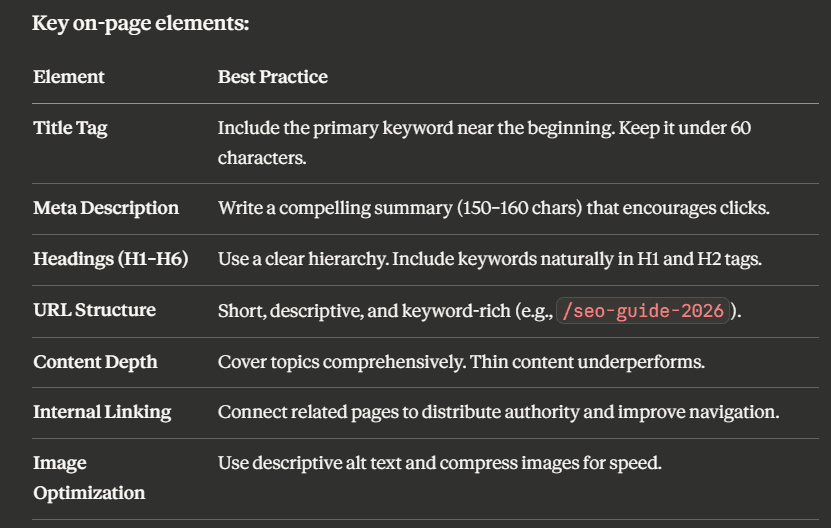
Keyword research is the backbone of on-page SEO. Use tools like Ahrefs, SEMrush, or Google Keyword Planner to find terms your audience searches for. Focus on: Search Intent . Is the user looking to learn, buy, or navigate? Long-tail Keywords. These are longer, more specific phrases with lower competition and higher conversion rates. Keyword Clustering. Group related keywords and create one authoritative page per cluster.
3. 🔗 Off-Page SEO Off-page SEO is about building your site's authority and reputation through external signals. primarily backlinks. A backlink is a link from another website to yours. Think of it as a vote of confidence. The more high-quality, relevant sites link to you, the more authoritative your site appears to Google. Proven link-building strategies: Guest Blogging. Write valuable articles for reputable sites in your niche. Digital PR. Get featured in news articles, podcasts, and industry publications. Skyscraper Technique. Find popular content, create something better, and reach out to sites linking to the original. Broken Link Building. Find broken links on other sites and offer your content as a replacement. Resource Pages.Get listed on curated resource pages in your industry. ⚠️ Avoid black-hat tactics like buying links or using private blog networks (PBNs). Google's algorithms are sophisticated enough to detect and penalize these practices.
Keyword Research: The Art of Understanding Your Audience Before writing a single word of content, you need to understand what your audience is searching for and why. Step-by-step keyword research process: Brainstorm seed keywords. Start with broad topics related to your business. Expand with tools. Use Ahrefs, SEMrush, Ubersuggest, or Google Search Console. Analyze search intent. Informational, navigational, commercial, or transactional? Assess difficulty vs. volume. Target keywords with enough volume but manageable competition. Map keywords to pages. Each page should target one primary keyword and several related secondary keywords.
Content Is Still King. But Context Is Queen
Google's algorithms have evolved to reward content that genuinely helps users. The E-E-A-T framework (Experience, Expertise, Authoritativeness, Trustworthiness) guides how Google evaluates content quality. Tips for creating SEO-friendly, high-quality content: Write for humans first, search engines second. Stuffing keywords reads poorly and is penalized. Answer questions thoroughly. Use tools like "People Also Ask" and AnswerThePublic to find what users want to know. Use multimedia. Images, infographics, videos, and interactive elements reduce bounce rate and increase time-on-page. Update content regularly. Fresh content signals relevance. Revisit and refresh old posts with new data and insights. Aim for topic authority. Build clusters of interlinked content around core topics rather than isolated posts.
SEO in 2026: The AI-Driven Search Era
The rise of AI Overviews (formerly SGE), voice search, and multi-modal search has fundamentally changed the search landscape. What this means for your SEO strategy: Optimize for AI snippets. Structure content with clear definitions, lists, and direct answers. Google's AI Overviews pull from well-organized, authoritative content. Conversational queries are rising. With voice search and AI chatbots, users phrase searches more naturally. Write content that mirrors conversational language. Brand mentions matter more. Unlinked brand mentions are increasingly seen as authority signals in AI-powered search. Zero-click searches. More users are getting answers directly on the SERP without clicking. Build brand awareness alongside traffic goals.
Measuring SEO Success
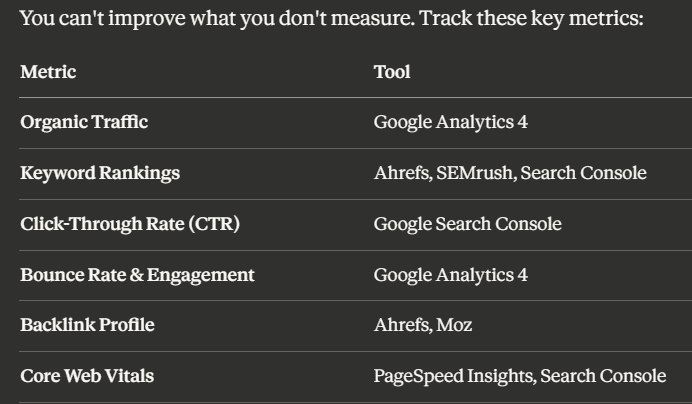
Set monthly reporting cadences and track progress against clear goals. whether that's ranking in the top 3 for a target keyword or doubling organic traffic within six months.
Conclusion
SEO in 2026 is more nuanced and competitive than ever. but the fundamentals haven't changed: create genuinely useful content, build a technically sound website, and earn authority through quality links and brand recognition. The brands that win in search are those that treat SEO as a long-term investment, not a quick fix. Start with a solid technical foundation, nail your keyword strategy, produce content that truly serves your audience, and build relationships that earn you quality backlinks. The climb to the top of Google is gradual. but once you're there, the rewards are extraordinary.
Ready to take your SEO strategy to the next level? Start with a free site audit using Google Search Console and identify your biggest opportunities today.